Plagiocephaly in babies: the consequences of not correcting it in time
When does “it’ll correct itself” stop being enough? We look at what can happen if the asymmetry is not treated in time.
Read more →
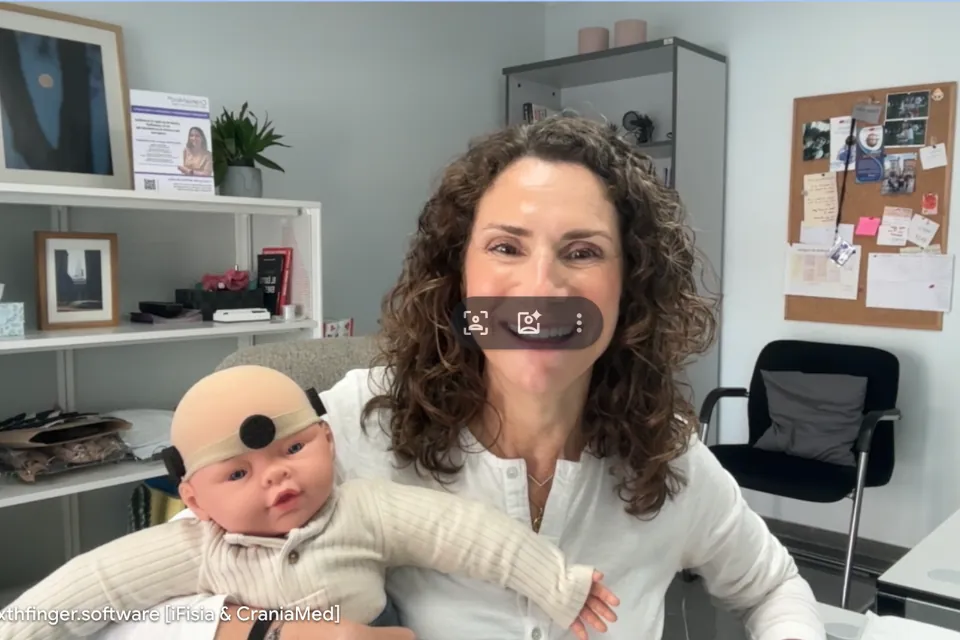
Post written by: MªÁngeles Mengual, head of customer relations and Co-Founder of CraniaMed
In this post we talk about CraniaMed support because bringing a new tool into everyday paediatric physiotherapy practice tends to raise the same questions for almost any professional…
How long will it take me to learn to use it? What happens if I have a question? Will there be someone on the other end when I need help?
As we see it, knowing that you have a team on hand to make you feel more confident is essential in children’s healthcare.
This is an area where precision and rigour are fundamental, and technology cannot be a barrier or a source of stress in the workflow.
It is not enough to download an app or receive a package of materials; we can all agree on that.
What makes the difference is having real backing that ensures you get the most out of the tool from the very first assessment.
At CraniaMed we are very clear about our way of working: we don’t hand over access to a piece of software and forget about you.
We see our relationship with each physiotherapy centre as ongoing support that begins before the first measurement and continues throughout our journey together.
Let’s look at how this way of working plays out step by step, starting from the moment you decide to bring the tool into your daily routine.
CraniaMed is an intuitive tool for measuring cranial deformities in infants designed to fit into your usual clinic routine without adding to your workload. However, to obtain objective, repeatable measurements, the process has to be standardised.
That is why every subscription or trial pack includes guided initial training.
In this initial session we don’t just explain where to click. We go through in depth all the operational details that guarantee maximum reliability in your assessments:
1️⃣ Correct placement of the mesh cap and markers: we show how to adapt the reusable materials to each baby to eliminate the bias caused by hair volume and ensure accurate calibration.
2️⃣ Preparing the clinic setting: we go over small tips on lighting, framing and posture to speed up image capture without disturbing the calm of the session.
3️⃣ The real-time measurement procedure: we explain how the three photos are taken in four seconds if the baby is still. But of course, that rarely happens, so we look at how to manage the usual pace of the session when the little one moves.
4️⃣ Reviewing the photographs: we teach you to check at a glance whether the images are correct before validating the data.
5️⃣ Practical interpretation of the report: we go through reading the Cephalic Index (CI) and the Cranial Vault Asymmetry Index (CVAI), understanding how this objective data supports the professional’s assessment.
6️⃣ Handling common cases: we share the experience built up in clinic to answer in advance the most frequent questions about positions, movements or types of deformity.
And, why not say it, during that training both sides often swap lessons learned. As you know, our philosophy puts people first.
That is why this initial training aims for the whole centre team to share the same measurement criteria and work with the same ease from day one. But our commitment doesn’t end when the training session does: that is where your real work in clinic and our day-to-day support begin.
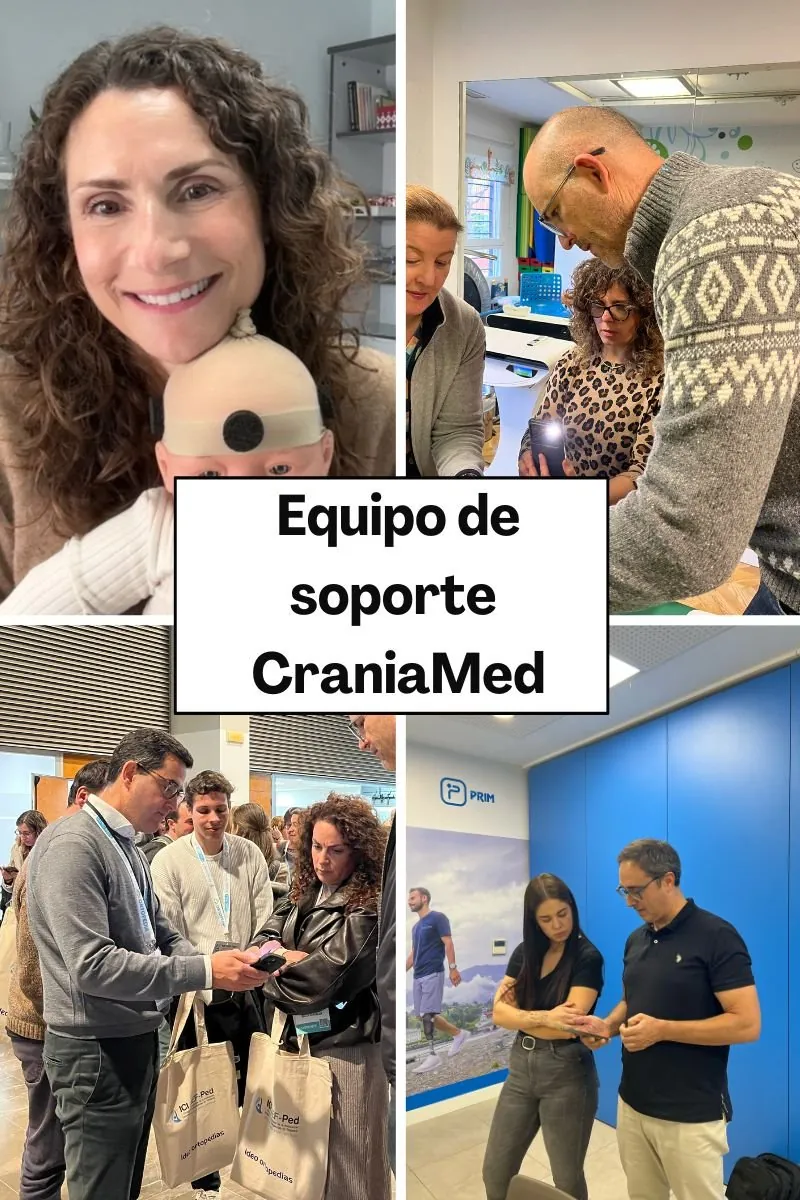
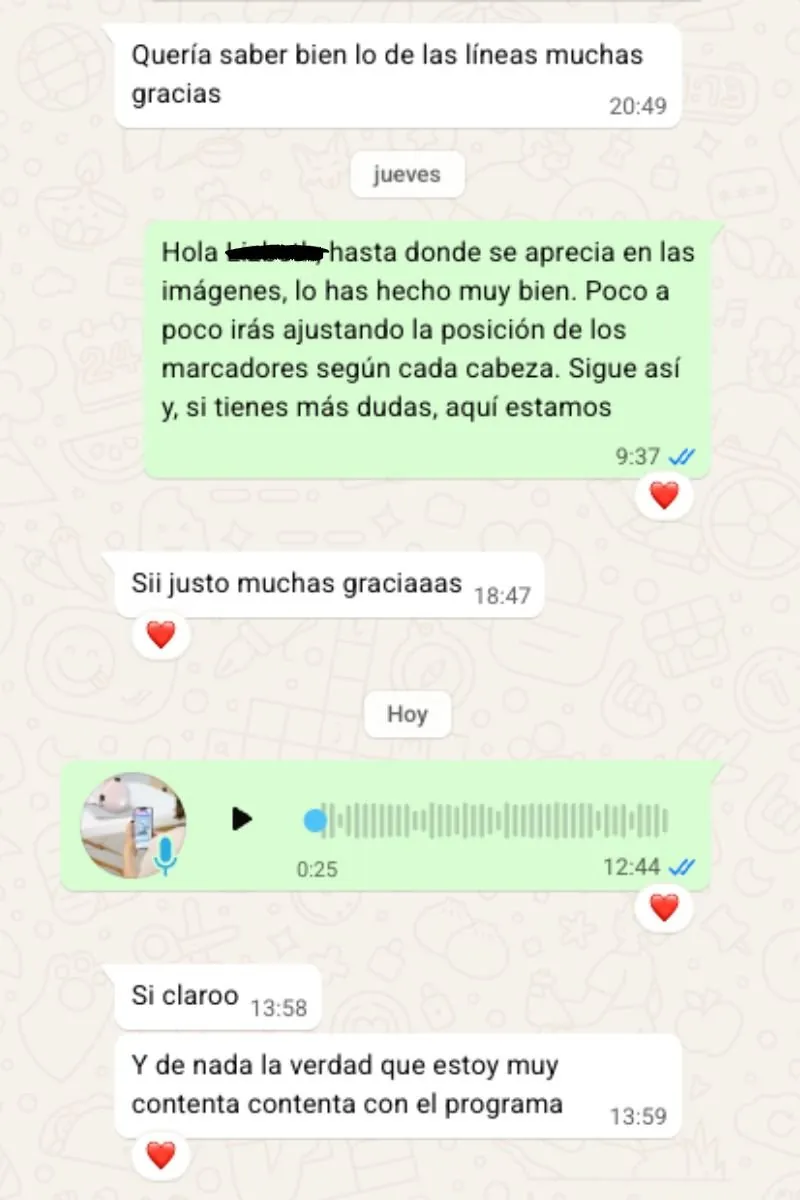
What happens when you are already measuring independently and a specific question comes up about a tricky case? The answer is simple: we are on the other end of the phone and WhatsApp to answer your questions as quickly as possible.
We know that between patients in clinic there is no time to send formal emails or wait days for a technical service to respond to an issue. That is why our direct support channel is designed to be quick:
Behind CraniaMed there is no machine or impersonal automated system: there is a specialist team that knows the day-to-day reality of paediatric physiotherapy and speaks your language. A team that includes physiotherapists, engineers and specialists in making you feel we always have answers for you.
With this direct channel and quick answers to any question, the confidence you gain in clinic also shows when you talk to families.
One of the biggest challenges you face in clinic is explaining the baby’s situation to parents clearly, calmly and objectively. Moving from visual impressions or manual measurements to a digital report completely transforms this conversation.
Having constant support allows you to convey an image of impeccable rigour and professionalism to families:
None of this value is a matter of chance; it comes from a way of approaching our project in which honesty and dialogue with you are the priority.
We believe transparency is the essential foundation for building a strong professional community. That is why the CraniaMed support team doesn’t promise magic solutions or try to gloss over the reality of daily practice.
We know there is a learning curve, that every baby sets their own pace in clinic and that your time is valuable.
That is why CraniaMed support is not one-way: we are constantly listening to the suggestions, needs and feedback of the physiotherapists who use the tool every day, so we can keep refining the software and how it is used.
That is the advantage of being developers and not just distributors: we listen to EVERYONE and value EVERYTHING you tell us.
When you decide to bring CraniaMed into your centre, you don’t just get an accurate solution for measuring and recording cranial asymmetries; you add to your team a technology partner committed to your peace of mind and the rigour of your work.
If you would like to see first-hand what it is like to work with this level of support in your own centre, getting started is very simple.
If you want to take the step towards objective, fast and documented measurement in your centre, we will be delighted to support you through the process.
You can explore your trial options and request initial training for your team:
A fast, accurate and non-invasive tool for measuring and monitoring cranial asymmetries in babies. Find out how it can help your practice.
Discover CraniaMed →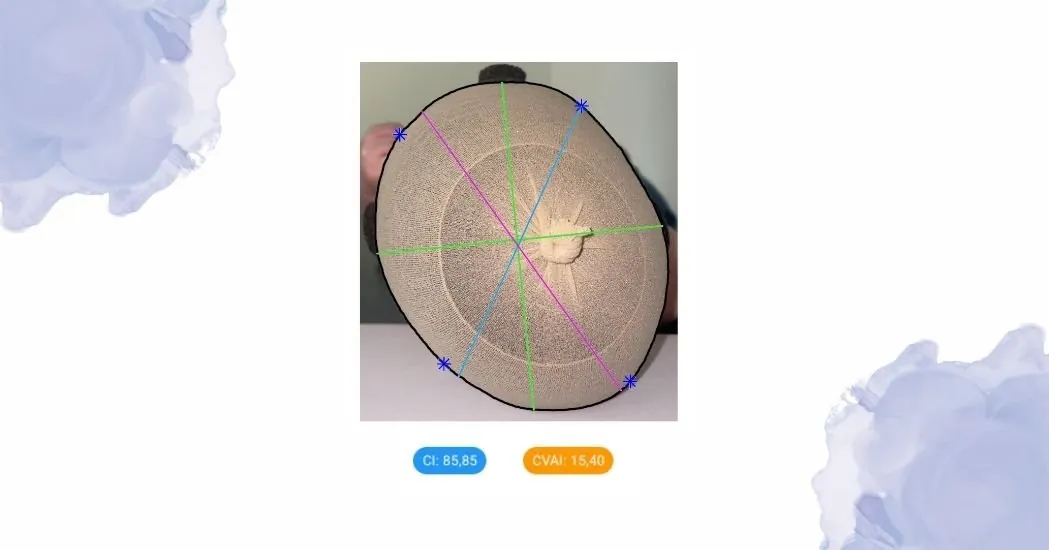
When does “it’ll correct itself” stop being enough? We look at what can happen if the asymmetry is not treated in time.
Read more →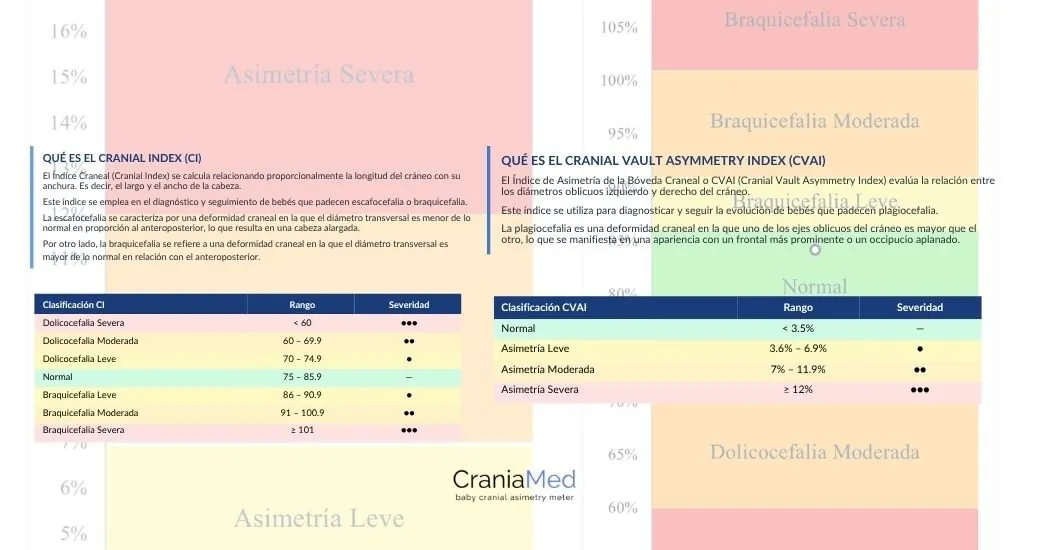
Why the millimetre-based chart falls short and how to read severity ranges with an objective index.
Read more →
A special guest shares practical guidelines for preventing cranial deformation from the first months of life.
Read more →