How common is plagiocephaly in the paediatric physiotherapy clinic (and how much goes unnoticed)
Between 4 and 6 in 10 infants have measurable cranial asymmetry. What the studies say and how much is missed if it is not measured.
Read more →
Measuring well is not enough. You also have to prove it.
Once we had overcome the technical challenges after two years of research and testing, we were clear that a tool designed to measure the shape of a baby’s head had to pass the same test as any method that hopes to be used in clinical practice: the test of science.
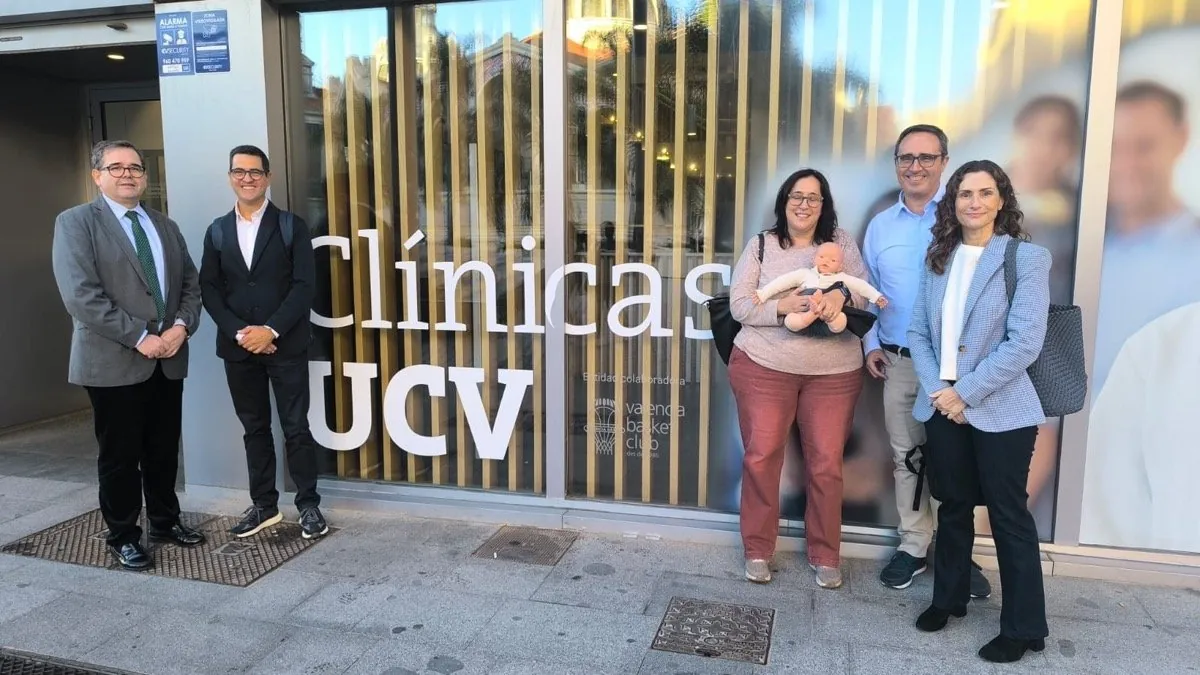
That is why today we are sharing news that we are especially excited about. The Universidad Católica de Valencia (UCV) — the Catholic University of Valencia — and CraniaMed have signed an agreement to promote research and the scientific validation of CraniaMed.
In this post we explain what it means to validate a measurement tool, where we are on that journey, what this agreement involves and how the training day we held at the UCV on 5 November went.
Let’s get started.
A measurement is only useful if we can trust it. And trust is not a matter of intuition, or even of technical feasibility: it is demonstrated with data.
During the day at the UCV, the Vice-Rector for Research, José María Tormos, summed it up very well when he reminded us that “objective data collection makes reproducible observation possible”. That is precisely the basis of the scientific method.
In practice, validating a tool such as CraniaMed means answering several questions, one by one:
Each question requires its own study. And each study takes its own time.
That is why validation is not a seal you obtain once and for all. It is a journey, and the honest thing to do is to say where we are on that journey.
We have taken several steps to reach this agreement. These are the main ones.
Before designing any scientific study, we needed to know whether CraniaMed performed well where it really matters: in the clinic and with real babies, not just with mannequins.
So we carried out technical tests at several centres, measuring the same babies with three different methods: the craniometer, the 3D scanner and CraniaMed.
We would like to take this opportunity to mention them and thank them for their help and expertise, which have been essential in getting to where we are today:
Why the scanner as well as the craniometer?
It is simple: the 3D scanner is one of the most precise and objective technical references for measuring skull shape, so comparing ourselves against it was a must.
The first cases analysed at PRIM showed very high agreement in the CVAI and the Cephalic Index. That is why we also continued collecting our sample with the company Additium 3D. We go into more detail in the post on the technical validation of CraniaMed against a 3D scanner.
Those tests were the boost we needed to keep going. And, above all, the foundation on which we designed the scientific validation.
Progress that is not shared cannot be tested. That is why we presented our work at two paediatric physiotherapy conferences:
Presenting it to fellow professionals allowed us to gather questions, criticism and suggestions that have helped to fine-tune the next steps. And, why not say it: it also helped us see whether a tool for measuring cranial deformities is something the sector needs.
The next step was more demanding: a controlled study, designed together with UCV researchers, to measure the accuracy, repeatability and reproducibility of CraniaMed with different operators and different phones.
To isolate the tool’s performance from the variability inherent in a real baby, the study was carried out on infant mannequins, and the results were compared with a reference 3D model.
The work has been submitted to Sensors, an international peer-reviewed scientific journal specialising in sensors and measurement technologies, and is in the process of publication. As soon as it is published, we will share the results here, with all the details and with their limitations too.
Which brings us to the reason for today’s post: the agreement with the UCV gives stability and continuity to everything above, and opens the door to what comes next.
Scientific validation answers a fundamental question: does CraniaMed measure well?
But there is another question that is just as important, and only the professionals who use it every day can answer it: is it useful in a real clinic?
As of today, November 2026, these are our figures:
The fact that each baby has (on average) two measurements means that professionals do not use CraniaMed just for a one-off assessment, but to monitor progress throughout treatment.
No usage figure replaces a scientific study. But the two together, evidence and everyday practice, are what really give a tool credibility.
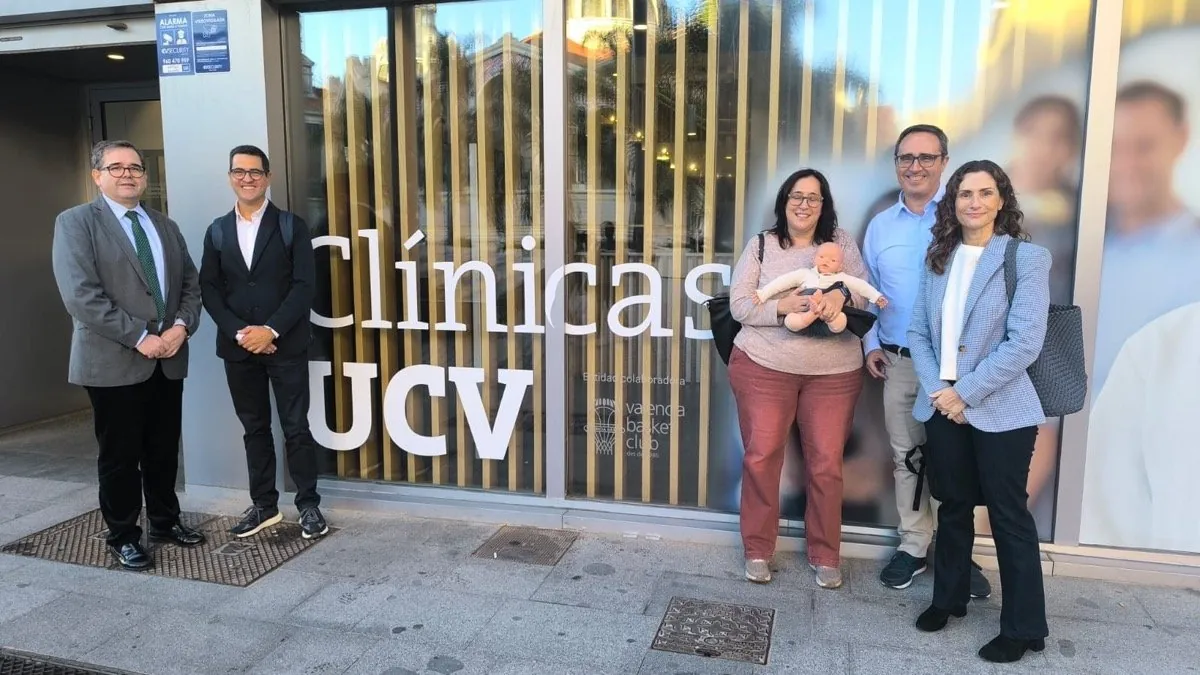
A partnership between a university and a technology company makes sense when both sides benefit. In this case, the agreement launches the research project “Validation of a tool for measuring cranial deformities”, with a planned duration of two years. This is what it includes:
During the day, the Vice-Rector highlighted the importance of partnerships that connect university research with the real needs of healthcare professionals and families.
For us, it means something very concrete: CraniaMed will continue to be evaluated with academic rigour, by independent teams and with published results.
And for you, as a professional, it means being able to work with a tool whose evidence does not stay in a brochure, but is built and shared step by step.
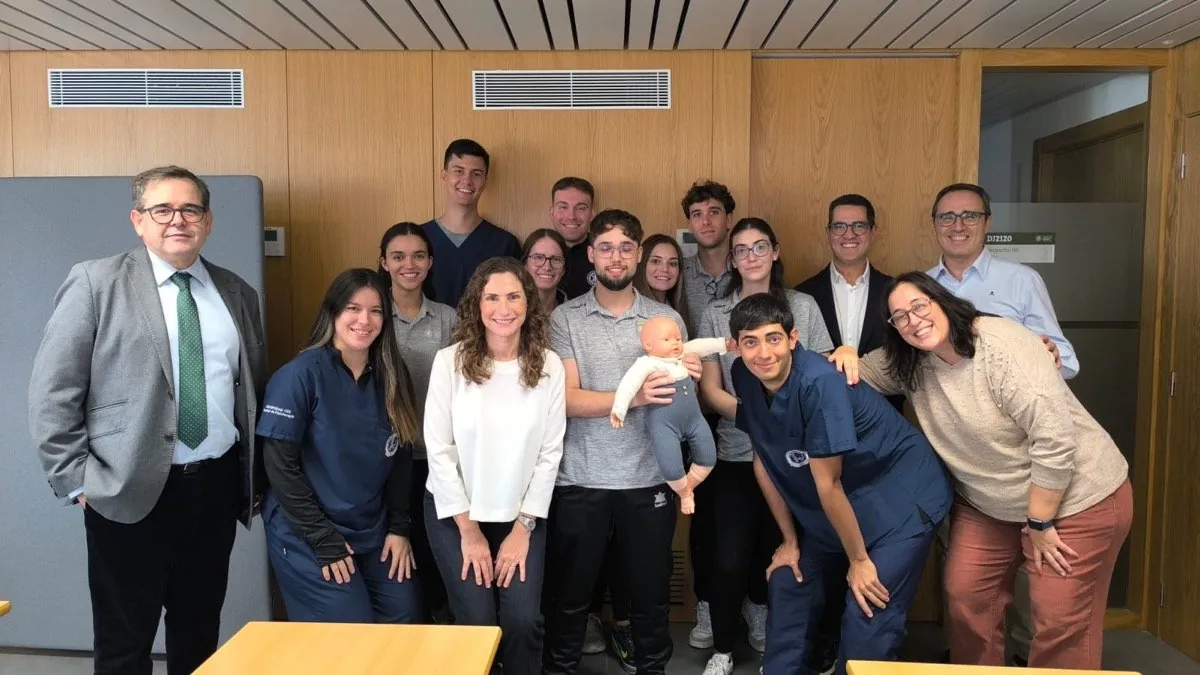
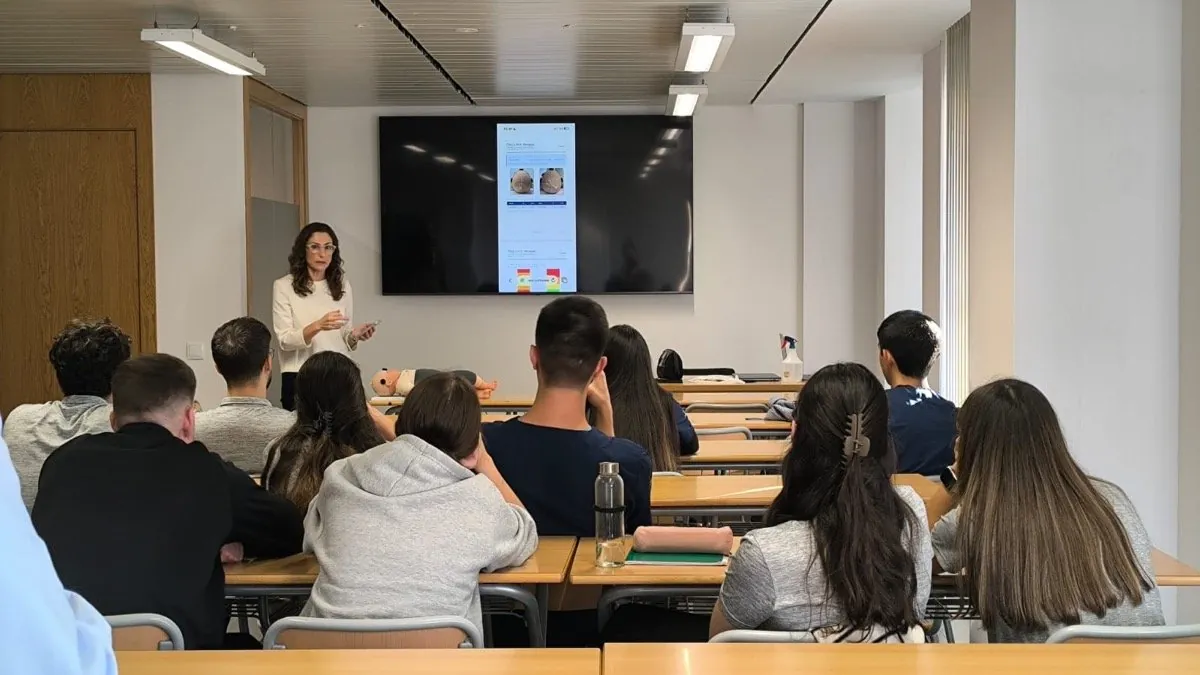
The day we held at Clínicas UCV on 5 November was a training session on how CraniaMed works and how it is applied in paediatric physiotherapy.
It was aimed both at students on the Bachelor’s Degree in Physiotherapy and at the physiotherapists who will be using CraniaMed at Clínicas UCV.
Representing CraniaMed were Patricio Canet, María Ángeles Mengual and José Miguel Lull. We were joined by the Vice-Rector for Research, José María Tormos, and Mónica Alonso, lecturer in the UCV Department of Physiotherapy and the university’s director of the research project.
During the session we covered:
This agreement is the starting point of a new stage in which to advance the scientific validation of CraniaMed.
Over the next two years, the aim is to take the evaluation of CraniaMed to real babies, under real clinical conditions: at Clínicas UCV, comparing CraniaMed with the conventional assessment method, and with data from all the centres taking part in sample collection. It is the logical next step after the mannequin study, and the one that will answer the last of the questions we raised at the beginning.
In the meantime, we are committing to two things:
We would like to thank the Universidad Católica de Valencia, Vice-Rector José María Tormos and Mónica Alonso for their trust and for their commitment to applied research. And everyone who attended the training day, for their time and enthusiasm.
Because measuring well means deciding well. And proving it is our responsibility. If you would like to get to know CraniaMed and see how it could fit into your practice, you can request a demo whenever you like.
A fast, accurate and non-invasive tool for measuring and monitoring cranial asymmetries in babies. Find out how it can help your practice.
Discover CraniaMed →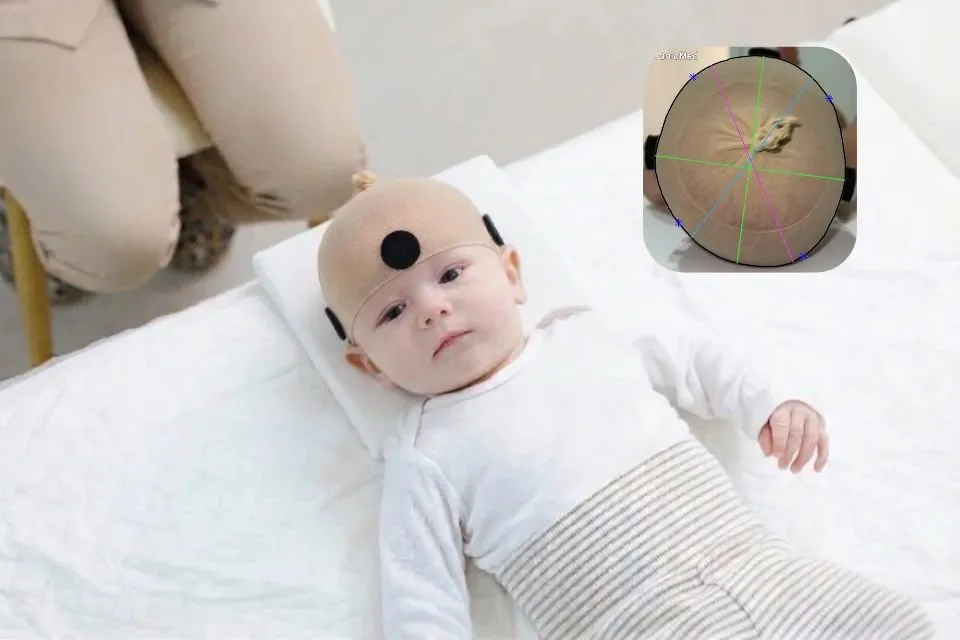
Between 4 and 6 in 10 infants have measurable cranial asymmetry. What the studies say and how much is missed if it is not measured.
Read more →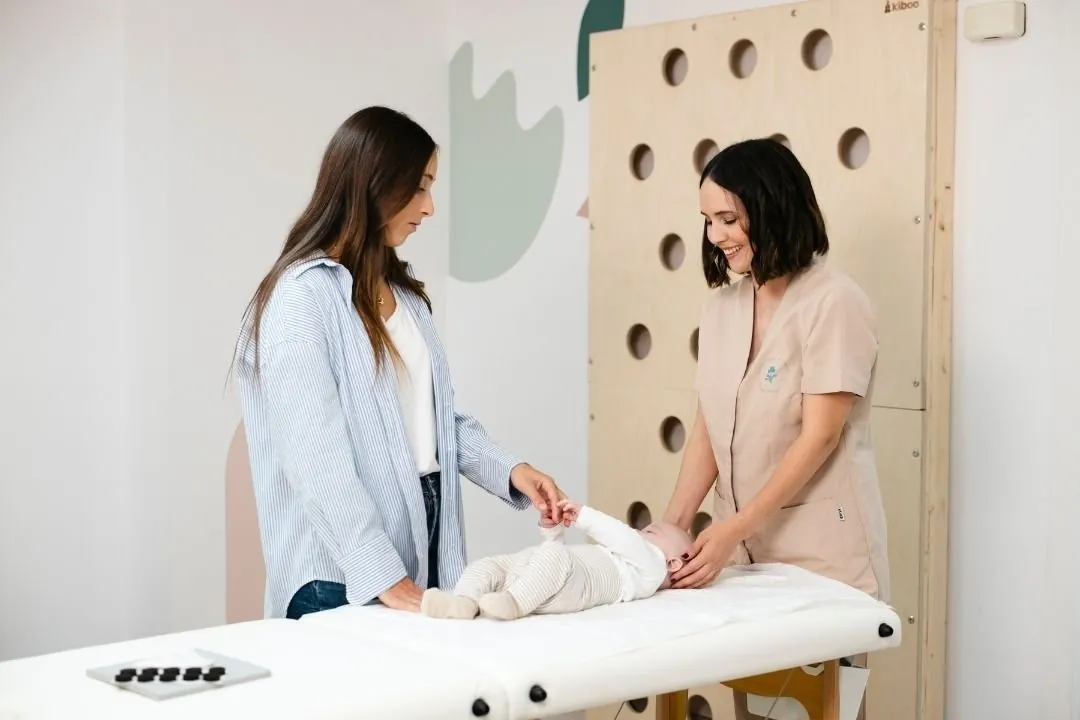
What the evidence says about when to act and how often to review babies’ skulls, and why there is a critical moment.
Read more →
Initial training, WhatsApp support and answers to your questions so you can measure asymmetries rigorously from day one.
Read more →